
“A South Africa teenager dies of malnutrition during initiation rituals in the Eastern Cape province.”
“Kenyan villagers shocked by the death of a girl who bled to death after trying to perform female genital mutilation on herself.”
|
|
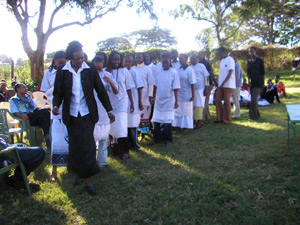
These were headlines to stories posted on BBC’s online news in August 2006. One story was followed by an opportunity for readers to post comments in response to the question, “Do you think being initiated is worth the risk if the rituals are dangerous?” Another headline read, “Are rites of passage out of step?”
“Rites of Passage” at a Glance
Circumcision is still widely practiced in Africa, usually as a rite of passage from childhood to adulthood. In western Kenya, circumcision season takes place in August every even-numbered year (i.e., 2002, 2004, 2006, 2008). “Rites of passage,” a term first used by French ethnographer Arnold Van Gennep,1 are rituals or events marking the stages of a person’s advance through life. They are vehicles of transition that act as reference points for the person and the community.
Transitions always take place as a person journeys from one life stage to another. Some transitions are more significant to one’s identity than others, especially that of initiation from childhood into adulthood. Circumcision is seen in many communities as the physical or tangible sign of this transition, and thus is highly valued. Theologian John Githiga says of his Kikuyu people in Kenya: “Circumcision, being a community rite par excellence, is the focal point of the Gikuyu rituals, myths, and symbols. It ritualizes, symbolizes, and externalizes both the inner world and the outer worlds of this people.”2
Often, one is considered a child until he or she goes through the “cut” (as it is often referred to); if this condition continues beyond a certain age, it is the cause of much shame to the individual and his or her family. Circumcision is not a private affair. As communal beings, the instruction, enculturation, and affirmation that one gets from his or her community is highly life-impacting. “What happened to a single youth,” continues Githiga, “happened corporately to the parents, relatives, neighbors, the living dead, and those yet to be born.”3
The girl who died in Kenya after attempting to circumcise herself is reported to have done so due to teasing by her peers. I too can remember having to hide while going to the bathroom as I did not want my classmates in boarding school to know I was still uncut at the age of thirteen. After I had the operation, I felt I belonged and had nothing to hide. 
Although circumcision is not the whole of the transitional rite, it is a ritual element. Rites of passage, according to Van Gennep, always involve a separation from the old stage of life, an in-between or liminal stage where instruction and rituals take place, and a reincorporation back into community.4 All the stages are laced with rituals, symbols, and processes that contribute to the psychological and social elements of the transition.
The Changing Face of Rites of Passage
In traditional times, the community took charge of all the elements of the transition and affirmed the initiate’s place and role in society. There was no confusion as to whether one was a child or an adult. However, times have changed. In most societies, these powerful community-building traditions have slowly been consumed by the forces of modernity. School-based education and cash economies disrupt traditional life. Global religions such as Christianity and Islam have discouraged ritual practices, including circumcision. Urban centers have gathered people from different cultures whose traditions are sometimes incompatible. Institutions of community have been eroded, leaving glaring vacuums in people’s lives.
Circumcision as a rite of passage from childhood to adulthood has lost most of its rightful context and cultural support structures, becoming a physical process that can be empty and even harmful. Today, it is often an uncelebrated nuclear family affair that hardly involves any meaningful mentoring or instruction by the wider community.
The result of this gap is evident among African youth. Many seek significance, identity, and community by rebelliously experimenting with pre-marital sex, substance abuse, and other negative influences, resulting in a myriad of contemporary challenges. The 9 February 2007 issue of the Kenyan newspaper Daily Nation reported that fifty-six percent of Kenyan youth have their first sexual encounter by the age of sixteen. The same poll indicated that fifty-one percent of the women under twenty-five years of age tested positive to unwanted pregnancies. The first few weeks of 2008 were filled with disturbing images of young people on the streets of Kenyan cities and countryside involved in wanton violence and destruction of property as they protested a Kenyan political crisis. Young people, when they lack structures such as those provided by rites of passage to guide, mentor, affirm, and celebrate them, easily fall prey to the traps of the evil one.
The question, then, should not be if circumcision is outdated, but how to recapture rites of passage to help children successfully transition into adulthood. Whether the cut is done or not, the need for a guided transition exists, preferably in the context of relevant community.
|
|
Recapturing Rites of Passage from a Christian Perspective
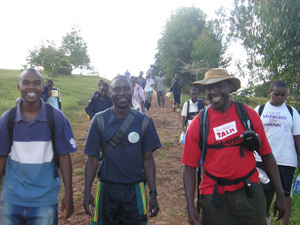
In Kenya, the need for a context for such transitions has given rise to a ministry called Tanari. This ministry, locally overseen by five non-denominational churches in Nairobi, has developed the Rites of Passage Experiences (ROPES) program, which is rapidly being adopted by churches in the region. The ROPES ministry proposes that the Body of Christ is today’s new and relevant community in which young people can grow up. God’s intention is that the Church would transcend tribe and ethnicity; and her values would be perfect, trustworthy, redeeming, enduring, and everlasting (Psalm 19:7-11). In the absence of traditional cultural systems to deal with transition crises, the local church fills the vacuum by constructing Christ-centered rites of passage. The rites provide meaningful discipleship opportunities that equip the youths with godly tools to face their roles in society.
Youths age thirteen or fourteen retreat to an adventure camp with their church-appointed counselors who prepare them for the teenage years. Instruction includes reflections on the characteristics of childhood and guided contemplations on how to live the next stage of life. After various symbolic rituals, usually involving adventure elements and guided spiritual disciplines, their families and church communities hold celebrations to reincorporate them into society to fulfill their new roles.
ROPES is more than the camp event. It takes one full year to prepare for it, and involves multiple members of the local church community. Parents are required to own the rites, in accordance with the scriptural mandate of Deuteronomy 6:7. Early in the year, they begin to meet regularly, and, guided by a church leader, prepare themselves for the task of raising teenagers. They share from their own collective experiences, do guided studies together, or learn from featured teachers. Some parents have given their lives to Christ after realizing how much they needed the Lord to help them in child-rearing.
Candidates are also separated from the children’s ministry in the church and attend a special transition class for the year. Topical instruction takes place during these weekly meetings and parents can revisit the foundations of the gospel, learn about their church histories and cultures, and cover specific topics such as sexuality and drugs. Counselors also meet throughout the year. This role is open to any member of the church body. A counselor must be in a growing walk with Christ, and must make a commitment to become the initiate’s lifelong mentor.
Some churches have seen in this an opportunity to mobilize pew-warming members of their congregations to take up this challenge. Each year, new counselors are needed. Some churches have adopted the ROPES programs and experienced transformation in their entire communities. The pastor of one such church, a Presbyterian congregation on the northern outskirts of Nairobi, saw the potential in ROPES to nurture unity in his church, a challenge he was encountering at the time. He mobilized his church from the pulpit, recruiting parents and counselors, preaching related sermon series, and lending the program credibility. His congregation, being fairly homogeneous in cultural composition, opted to include male circumcision as part of the ROPES they designed. At the end of the year, the pastor gave testimony of how the dynamics of the church had been changed:
The junior youth and senior youth, groupings that previously clashed as they sought control of church resources (such as music equipment), found a common task to partner in: acting as big brothers and sisters to initiates throughout the year. The Women’s Guild and the Presbyterian Church Men’s Fellowship groups partnered in mentoring the young men and women coming through ROPES. The church is excited and all groups are working together in this task.
It is not the rites of passage that are out of step with today’s world. Rather, it is a lack of appropriate models that leaves individuals disconnected from healthy community. Rites of passage, designed to suit the times and context, present opportunities for the local church to capture vibrant Christian community.
Endnotes
1. Van Gennep, Arnold. 1966. The Rites of Passage. 4th ed. trans. Monika Vizedom and Gabrielle Caffee. Chicago, Illinois, USA: The University of Chicago Press, 10.
2. Githiga, John Gatungu. 1996. Initiation and Pastoral Psychology: Towards an African Personality Theory. Canyon, Texas, USA: Githiga International Ministries, 21.
3. Ibid, 24.
4. Van Gennep, 11.
